

How To Program My Car Key
FollowOverview
-
Sectors Cleaning Services
-
Posted Jobs 0
-
Viewed 22
Company Description
10 Sites To Help Be A Pro In Car Key Programming For All Makes And Models
Comprehensive Guide to Car Key Programming For All Makes and Models
The automotive industry has actually gone through an extreme transformation over the last couple of years. Gone are the days when a simple metal blade might start any automobile. In the contemporary period, car secrets have actually progressed into sophisticated electronic devices designed to offer both benefit and high-level security. This shift has introduced a critical service into the automotive world: car key programming. For owners of any make or model, comprehending how this procedure works, why it is necessary, and who can perform it is vital for contemporary vehicle maintenance.
Understanding Car Key Programming
Car key programming is the process of syncing a replacement or extra key’s electronic chip with the vehicle’s onboard computer, typically referred to as the Engine Control Unit (ECU). The majority of automobiles produced after 1995 are equipped with an immobilizer system. This system serves as a digital “handshake” in between the key and the car. If the car does not acknowledge the unique digital signature of the transponder chip inside the key, it will disable the fuel system or the starter, preventing the car from running.
The Components Involved
- The Transponder Chip: A small microchip situated inside the head of the key or the fob that transfers a low-level signal.
- The Antenna/Receiver: Usually situated around the ignition cylinder, it chooses up the signal from the key.
- The Immobilizer System: The software unit that validates the signal and enables the engine to start.
The Evolution of Automotive Keys
To understand the complexity of programming, one need to take a look at the numerous kinds of secrets utilized throughout different ages and brand names.
Table 1: Evolution of Car Key Technology
| Era | Key Type | Programming Requirement | Security Level |
|---|---|---|---|
| Pre-1990s | Traditional Mechanical | None (Physical cut only) | Low |
| 1990s – 2000s | Transponder Keys | OBD-II Programming | Medium |
| 2000s – 2010s | Remote Fobs/Flip Keys | Syncing & & Chip Programming | High |
| 2010s – Present | Smart Keys/Proximity Fobs | Encrypted Digital Pairing | Extremely High |
Why Is Programming Necessary for All Makes?
Whether a motorist owns a Ford, a Toyota, or a high-end BMW, the need for expert programming emerges in numerous situations:
- Lost or Stolen Keys: When a key is lost, a new one should be programmed. More significantly, the old key’s data must be cleaned from the car’s memory to avoid unauthorized gain access to.
- Key Malfunction: Electronic elements inside the fob can fail due to water damage or physical impact, needing a brand-new circuit board to be synced.
- Replicate Keys: Many families need numerous keys for one automobile. Each brand-new key needs to be individually introduced to the ECU.
- Ignition Replacement: If the ignition barrel is replaced, the computer should be informed to recognize the brand-new signals associated with the brand-new hardware.
Programming Across Different Vehicle Makes
The problem and approach of programming vary significantly depending upon the maker’s origin.
Domestic Vehicles (Ford, GM, Chrysler)
American makers traditionally used “on-board programming” (OBP) for numerous designs, allowing owners to configure a third key if they already had two working ones. However, recently, these brands have actually moved toward more secure systems that need specialized diagnostic tools connected to the OBD-II port.
Asian Vehicles (Toyota, Honda, Nissan, Kia, Hyundai)
Japanese and Korean makes are generally understood for their dependability, but their security systems are robust. Toyota and Lexus, for example, often need a “reset” of the immobilizer system if all secrets are lost, which is a more extensive process than basic duplication.
European Vehicles (BMW, Mercedes-Benz, Volkswagen, Audi)
European models are frequently the most complicated. Lots of make use of encrypted rolling codes that change whenever the car is started. Programming these frequently requires EEPROM (Electrically Erasable Programmable Read-Only Memory) abilities, where a specialist must read information directly from a circuit board.
The Professional Programming Process
While the specific actions vary by design, an expert locksmith professional or specialist typically follows this protocol:
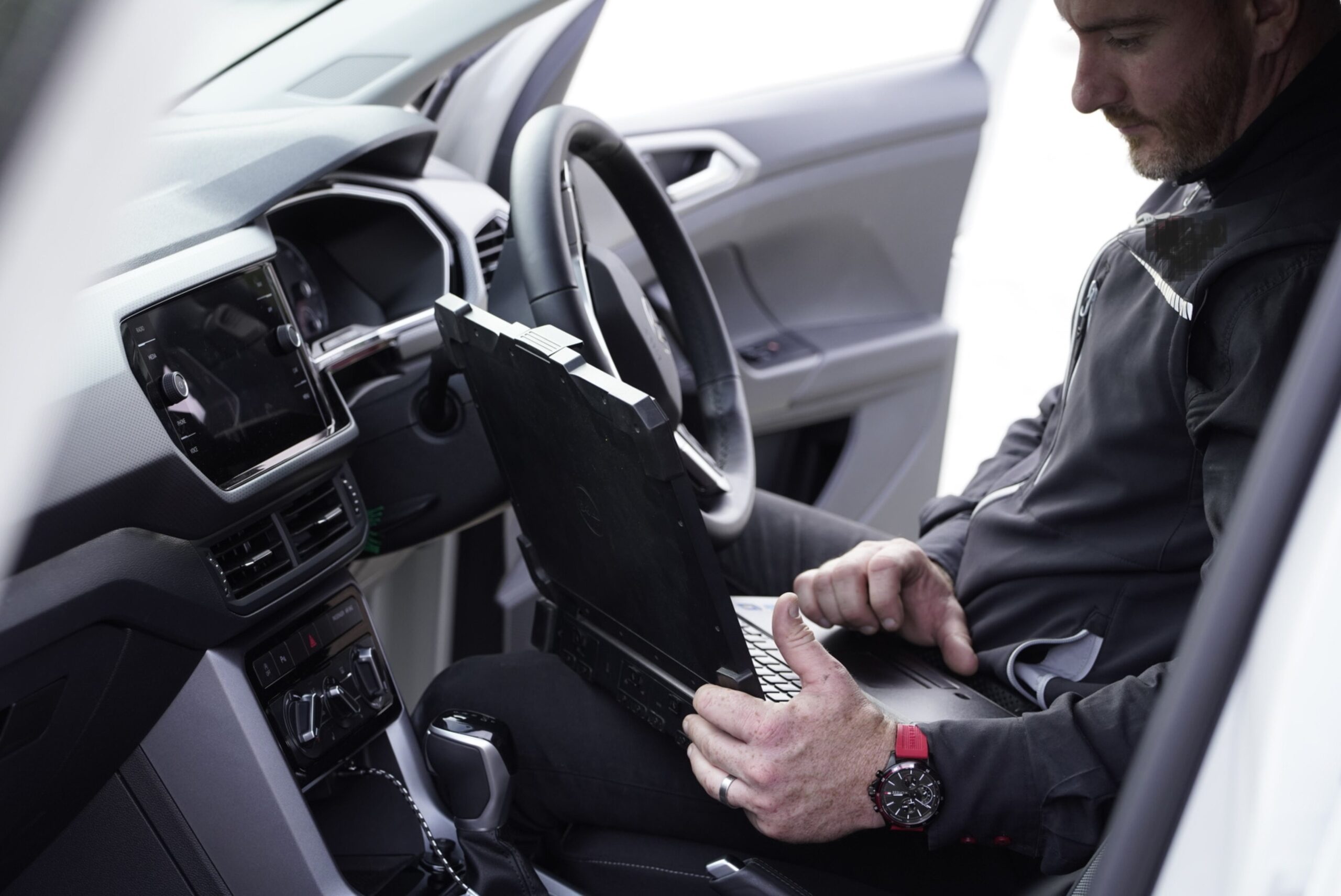
- Diagnostic Connection: A customized programming tool is plugged into the vehicle’s OBD-II port (generally located under the dashboard).
- Identity Verification: The tool reads the lorry’s VIN and security status.
- Security Pin Extraction: Many automobiles require a specific “PIN code” or “BCM code” supplied by the manufacturer to permit access to the programming menu.
- Key Clearing (Optional): If keys were stolen, existing secrets are deleted from the system.
- Learning Phase: The new key is placed in the ignition or designated “secret pocket,” and the computer system is advised to “discover” the new transponder ID.
- Checking: The service technician confirms that the key starts the engine which all remote buttons (lock, unlock, trunk) function correctly.
Car Dealerships vs. Mobile Locksmiths
When a key needs programming, owners normally have two options. The distinctions in expense and convenience are substantial.
Table 2: Service Provider Comparison
| Feature | Dealer | Mobile Automotive Locksmith |
|---|---|---|
| Tools | Manufacturer-specific | Multi-brand diagnostic tools |
| Wait Time | Often needs an appointment (days/weeks) | Often same-day emergency situation service |
| Convenience | Vehicle needs to be towed to the store | The service pertains to the car’s place |
| Cost | Premium/High | Competitive/Moderate |
| Expertise | Specialists in one brand | Experts in all makes and designs |
Specialized Programming Services
Beyond standard transponder secrets, modern-day innovation has actually introduced advanced programming requirements:
- Proximity Fob Programming: For automobiles with “push-to-start” buttons, the car must be set to detect the key’s existence through Radio Frequency Identification (RFID) within a specific range.
- Remote Keyless Entry (RKE): This includes programming the buttons that manage door locks and alarms, which is typically a separate step from programming the engine-starting chip.
- EEPROM and Soldering: In cases where the ECU/Immobilizer is locked or damaged, high-end technicians can desolder chips and compose data directly to the hardware.
Frequently Asked Questions (FAQ)
1. Can I program a car key myself?
For some older domestic cars, “on-board” series (like turning the ignition on and off a particular number of times) might work. However, for most cars made in the last 15 years, specialized software application and hardware are required.
2. Just how much does car key programming expense?
The expense differs depending on the complexity of the lorry. Standard transponder keys may cost in between ₤ 80 and ₤ 150, while high-end wise secrets for European models can vary from ₤ 250 to ₤ 500 or more.
3. What info do I need to provide?
To configure a key for any make or design, you must have the Vehicle Coding Near Me Identification Number (VIN), evidence of ownership (registration or title), and your individual recognition prepared.
4. Can a locksmith professional program a key purchased online?
The majority of professional locksmith professionals can configure keys purchased from third-party websites, however they typically do not provide a warranty on the hardware itself. Some “opened” or “refurbished” secrets found online might likewise stop working to program if they were not appropriately cleared.
5. If my battery passes away, will my key lose its programming?
No. The programming is stored in non-volatile memory (like a flash drive). A dead car battery or a dead key fob battery will not remove the sync between the key and the automobile.
Summary Checklist for Car Key Programming
If you find yourself in need of a brand-new key, follow these steps to make sure a smooth procedure:
- Identify your key type: Is it a fundamental transponder, a flip key, or a distance fob?
- Look for spare secrets: Having an existing key frequently makes the programming of a 2nd one less expensive and quicker.
- Collect car information: Have your VIN and proof of ownership prepared.
- Compare quotes: Call a mobile locksmith professional to compare their rates versus the local dealer.
- Validate the service: Ensure the professional tests all functions (beginning, locking, and alarm) before concluding the service.
Car key programming is a vital intersection of locksmithing and computer system science. As vehicle makers continue to prioritize anti-theft innovation, the methods utilized to program keys will just end up being more sophisticated. Whether you drive a typical commuter car or a high-end luxury vehicle, accessing expert programming services makes sure that your car remains safe and secure while offering you with the seamless benefit of contemporary entry systems. By comprehending the process and knowing your choices between dealers and locksmiths, you can manage your car’s security with self-confidence.